The Right Camera Solution for Every Video Security Project
Video Security: Mission Accomplished
-
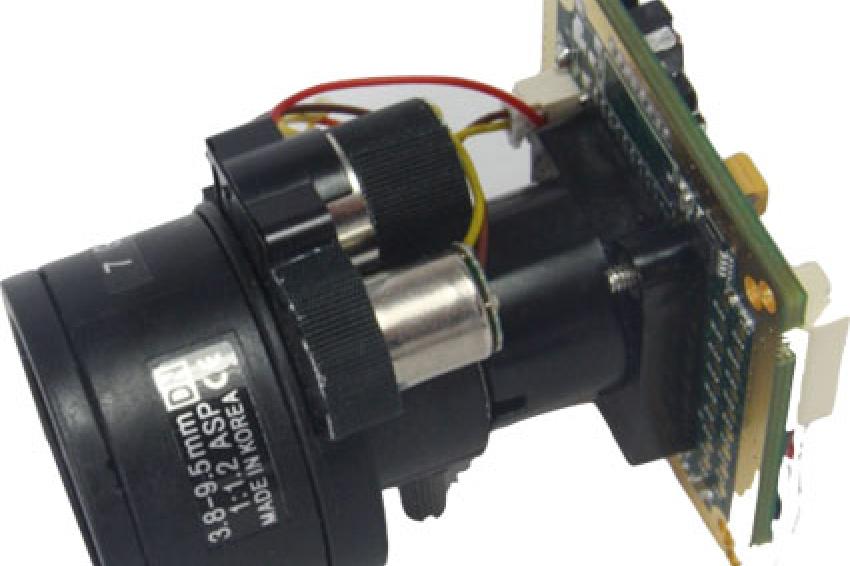 True Day/Night camera with Seawolf chip
 -
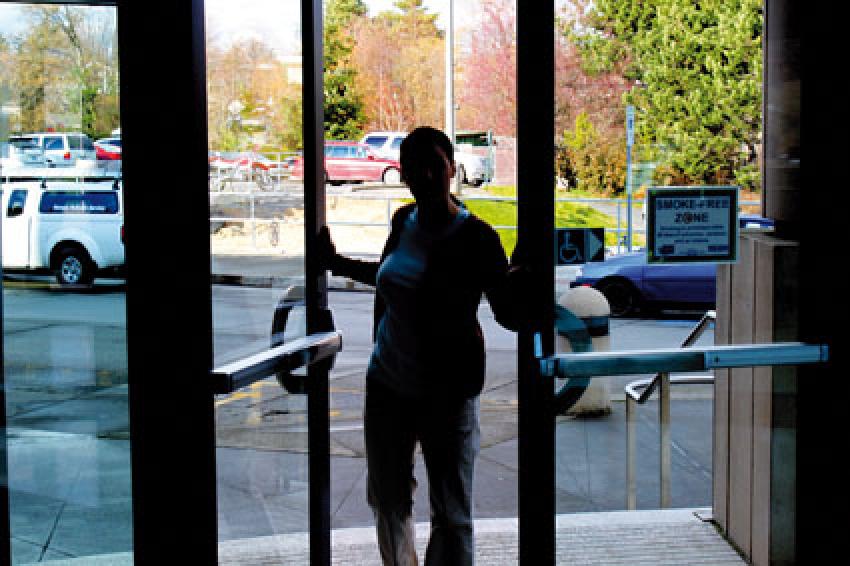 This images compare traditional analog cameras with Seawolf: This set shows a typical backlight situation. The CCD has a beautiful picture of outdoors, but you can‘t identify the woman. The next image shows how Seawolf corrects the backlight problem.
 -
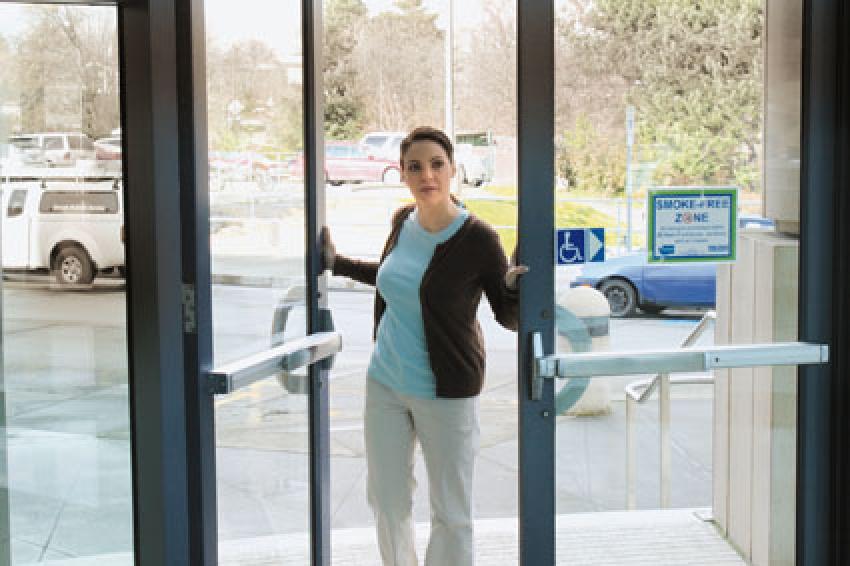 Seawolf corrects the backlight problem
Finding the right security camera for every application is a challenge for system integrators, installers, end users, and even manufacturers.
The Challenge for System Integrators:
Integrators have to be experts on hundreds of different kinds of cameras by dozens (or more!) of manufacturers. To make things more complicated, integrators may not, because of purchase requirements, even have access to the best cameras for a particular job.
The Challenge for Installers:
Installers have to set up cameras to solve specific problems. They have to be familiar with many different camera models and the set up procedures for all of them. This requirement could translate to more installation time costing the integrator money.
The Challenge for End Users:
End users have to select the right cameras. They can't pick a single type of camera and expect it to work in each area covered by the security system. Compounding this problem, end users commonly do not have the domain expertise to know specifically what cameras they need.
The Challenge for Manufacturers:
In order not to lose sales, manufacturers attempt to create cameras specific to each vertical market and for every type of video problem. However, this is an impossible task, so a manufacturer may find that they offer cameras that work in one corner of a retail store, but only a high resolution camera produced by their competitor works in another area.
Looking for a One-size-fits-all Solution
In today's market, no camera is a one-size-fits-all solution. Different scenarios create the need for a wide range of cameras:
- An environment that is backlit -such as the inside of a building or vehicle looking outside, on a loading dock, or in a lobby - requires a camera that offers wide dynamic range (WDR). Dynamic range is the ratio of the brightest image that can be captured by the imaging system to the darkest image that can be captured simultaneously in the same video frame. Light intensity greater than the brightest possible image will cause the sensor to saturate to white, while light intensity less than the darkest possible image will not register on the camera's image sensor. Both of these conditions distort the image, hiding potentially vital information that lies outside the dynamic range of the sensor. WDR cameras are capable of capturing highlight and shadow detail - including backlit images - in the same scene. The greater dynamic range, the more significant improvement in image quality in scenes consisting of both bright and dark areas.
- Some situations need cameras that are capable of capturing natural color in any lighting. For instance, security personnel watching monitors in casinos need to be able to distinguish between red and black playing cards as well as the color of the chips in both well-lit and lowlight areas. Natural color is also important in identifying people where subtle differences in skin tone and clothing shades can make a difference when capturing and prosecuting a suspect in a crime.
- Video is often used for license plate identification, facial recognition, and in transit applications where reading the markings on train cars or buses is essential. These scenes require high resolution cameras which make it easy to distinguish image features and details.
- Additional challenges for security cameras include lighting issues such as glare and reflections. These problems can cause image artifacts including vertical smear and pixel blooming which make the video unusable for identification or prosecution. A security system that cannot produce actionable images is a waste of money. Period.
- And when and if an integrator or end user gets a handle on all of the situations above, they are often faced with a new challenge - lowlight! Envision a warehouse with an indoor camera aimed at its loading dock door. The integrator recommended and the end user purchased a camera capable of producing clear, noise-free video during daytime hours. The camera's WDR allows it to get clean images of both the inside of the warehouse and the outside dock. However, at night, only emergency lights are kept on. Unfortunately, for most cameras low light equals no color, limited wide dynamic range, high levels of noise, or in the worst case, no image at all (black). One solution is to add more light, which is expensive and bad for the environment, and another is to use true day night (TDN) cameras. TDN cameras can produce an image in lowlight, but without color due to their reliance on infrared light. A security guard, the police, or a prosecuting attorney won't be able to tell the bad guy in the red shirt from the good guy in the blue. Many integrators and end users are forced to settle for a third option - less than ideal video.
Retail Store Scenario
Leon, an integrator, does a walk through for a retail store. He notes the location's all-glass store front. The daylight streaming through the windows wrecks havoc on the store's traditional CCD cameras. The analog CCD cameras can't adjust to both the bright light coming in the window and the shadowy areas around the displays. The retailer mentions to Leon that employee theft at the registers is a huge problem for the store and becoming worse. The current cameras capture the point of sale transactions, but the store's security personnel can't distinguish between the money denominations - the orange 50 euro bill looks distressingly like the yellow 200 euro bill.
The store offers high-end jewelry in locked display cases. Glare from the front windows bounces off the cases causing the store's older cameras to bloom. The glare makes it impossible to see if the jewelry removed from the case is put back. To make matters worse, a shoplifter recently stole a small ring. Though the clerk was certain who had taken it, the video recording did not capture the theft.
Finally, the store caters to an environmentally conscious clientele. Store management wants to demonstrate to its customer base that they are on the forefront of the "green" earth movement. One of the ways the store practices this is by having motion-activated lights in the restrooms and by leaving the lights off in the storage area. The storage room is dim with just two small windows at the back. The cameras currently in place are practically useless. Less than ideal employees have already taken advantage of the blind cameras and are suspected of pilfering merchandise during unauthorized breaks.
Integrator's Goals
Leon has several goals for this project:
- He wants to win the job by providing the best solution at the best possible price.
- He wants the new system to be installed quickly, saving him technician hours and enabling him to offer a lower bid than his competition.
- He wants to use cameras by a single manufacturer making it easier for his installation team.
- He wants to earn the trust of the client. By demonstrating he has the best, most affordable solution and being able to install the equipment with minimal disruption to the client's business, he hopes to secure negotiated work from this client in the future.
- He wants this client to recommend his integration company to other retailers.
Integrator's Solution
Leon knows he can meet all of his goals because of a revolutionary new camera chip. The Seawolf chip by Pixim Inc., a leading provider of imaging technology for enterprise security cameras, offers the industry's highest effective resolution, greatest wide dynamic range, and best low light performance at an affordable price. By selecting cameras based on Seawolf, Leon can offer his client cameras that can handle backlight situations, capture realistic color, and eliminate glare in all lighting conditions. Best of all, Seawolf cameras offer 10 times the low-light performance of previous generation security cameras while maintaining industry-leading wide dynamic range.
Now, for the first time, Leon's technicians can install cameras that will work in any lighting condition right out of the box. They will be able to decrease their time spent on the ladder, because they will only have dome and box cameras from one manufacturer to install. They will be able to use the same cameras in the storage room that they use by the jewelry cases.
Boasting 690 HTVL effective, Seawolf delivers the highest usable resolution to the CCTV end user. Traditional, analog CCD-based cameras lose much of their resolution when the video is recorded and reviewed. However, due to Seawolf's high total resolution (horizontal times vertical), its high-quality, color images are preserved by commonly used DVRs and displays. Leon's client will now have high resolution images that can be used for evidentiary purposes following a crime.
Additional Seawolf Benefits
Like all of Pixim's chip products, Seawolf is based on Pixim's Digital Pixel System technology. Pixim's technology employs hundreds of thousands of self-adjusting pixels to act like individual cameras, eliminating image compromising visual noise and delivering the highest resolution, natural color and clarity, even in challenging lighting conditions. This all-digital system efficiently captures the whole picture, down to the crucial details. In contrast, traditional, analog CCD cameras use image sensors where every pixel receives the same exposure creating overexposed images in bright areas and underexposed images in dark areas.
Integrators can choose between analog and IP Seawolf cameras based on the requirements of their customers. The Seawolf chip is ideal for IP cameras. Users of IP cameras will benefit from Seawolf's global electronic shutter, progressive scan image capture, full D1 resolution at 30 frames per second, and low network bandwidth requirements.
Seawolf-powered cameras produce noise-free, clean images which require less hard drive space to store video content. End users gain tremendous flexibility in how they can use that additional storage capacity. For instance, they can store additional hours of video per camera, store higher-quality video for one or more cameras, increase the video frame rate stored for one or more cameras, or use smaller, less-expensive hard drives and backup systems for video recording.
Seawolf Meets the Challenges
Seawolf meets the challenges for every group:
- System Integrators can now offer Seawolf cameras to their customers knowing they are selling cameras capable of excelling in all lighting conditions including low light. They can select analog or IP cameras and expect good results. They can partner with a leading manufacturer and save money by reaching volume discount levels. Plus, installation hours and the number of return site visits will decrease saving them money.
- Installers can now focus on one camera line, thoroughly learning the set up procedures. They will decrease their installation hours knowing that cameras based on Seawolf can be installed in any location regardless of lighting conditions and still produce high-quality video right out of the box.
- End users now have the option of cameras that will help them deter crime and prosecute criminals if an incident does occur. They will save money by reducing costly storage space and through reduced installation times and inconvenience.
- Manufacturers will be able to use a single, digital chip, rather than more complicated mixed-signal, multi-chip sets to develop new camera portfolios. Single board camera modules based on the Seawolf chip make it easier for manufacturers to develop compact camera formats. Their Seawolf-based cameras will offer true all-lighting capability, meeting the most demanding image quality expectations across the security market, including retail, banking, gaming, education, transit, commercial, and industrial applications.
Trusted manufacturers serving the European market, such as March Networks, GE Security, Dallmeier, Genie CCTV, Ovii, and Camtron, are already planning production of Seawolf-based cameras.
Contact
Pixim
1395 Charleston Road,
CA 94043 Mountain View
California
+1 650 9340550
+1 650 9340560