Addressing the Special Needs of Hotel Safety and Security
23.04.2012 - What could be the usual company Security Manager‘s worst nightmare? Perhaps a wide open front door with no turnstile and lots of complete strangers strolling in and out unchallenge...
-
 Photo: .shock / fotolia.com
What could be the usual company Security Manager‘s worst nightmare? Perhaps a wide open front door with no turnstile and lots of complete strangers strolling in and out unchallenged, able to wander freely all over the building, and not a boundary fence in sight. It‘s not a bad dream; it‘s the daily challenge for hotel and resort security officers who are charged with ensuring their guests safety and security. We look at the tools and methods available to them to provide the service that every guest can rightfully expect.
A wide open front door is absolutely normal for a hotel. Indeed, in some locations the hotel foyer is simply a stroll-in extension of a shopping arcade or concourse and there is no door at all. While the concierge or staff at the reception desk can keep half an eye on the entrance area when they are not assisting guests, they already have enough to do and cannot be expected to perform any continuous security function. During ‘normal working hours' - that is, early morning until quite late at night - guests would rightly expect to have free access to the foyer without any hindrance.
So the secure guest ‘fortress' can only be further on in the hotel room itself where the guest must both feel and be safe and secure. Purely mechanical guest room door locks are becoming ever more rare nowadays. Electronic locks started to be introduced as long ago as the late 1970s and have continuously reduced the level of hotel room break-ins and theft as their technology has been further developed, with the effect that insurance companies often reduce their premiums when such security measures are improved. The ability of electronic systems to log access activity and decisively prove which key was used, and when, is welcomed by hotel staff and crime investigators alike, particularly for solving ‘inside job' theft by staff.
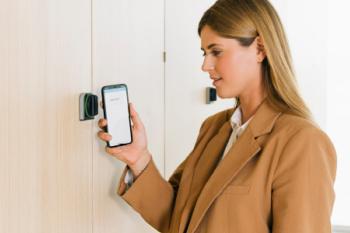
Hotel guests may soon be asked to either register their mobile phone/PDA or to provide a fingerprint when checking in. The development trend is definitely towards non-contact or biometric guest recognition, including various RFID and face recognition solutions, as well as using the guest's own mobile device to authorize the door to open via Bluetooth. Integrated into the front-of-house system, such systems very much reduce the task of managing physical keys, cards or plastic strips.
Video Surveillance
There are areas of a hotel or resort, of course, where staff are not continuously present. Cameras installed in these areas will deter any criminals and provide documentary evidence in the event of a theft or attack but, no doubt taking lessons from Danny Ocean, organized gangs know exactly where the ‘black spots' are. However, ensuring that there is comprehensive coverage of all the areas that are otherwise out of view can bring such organized crime to a halt. A subtle mixture of both obvious and concealed cameras will provide optimum surveillance with a high deterrent factor. The mix may also include camouflaged cameras fitted, for example, in fixed items of furniture or what appear to be smoke detectors.
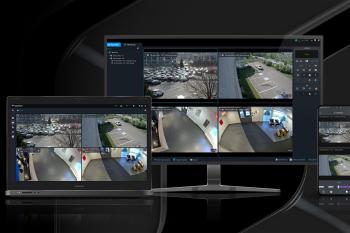
Today's advanced image analysis algorithms make effective surveillance very much easier for large numbers of cameras and can be selectively applied to raise the alarm exactly when they should, with very small risk of false alarms. Networked cameras stream live images into an IP network and thereby enable surveillance at any other point on the network. Importantly, it is now easy for the Security Chief to monitor events live anywhere on his or her mobile device. All flavors of camera can be networked nowadays; economic fixed domes, fixed or PTZ weatherproofed outside cameras, infra-red low-light cameras as well as high-definition Megapixel cameras. The Swedish manufacturer Axis, for example, has a comprehensive range of equipment that copes with local environmental conditions, complies with national legislation and satisfies operator preferences.
Wherever I Lay my Head
It is important not to forget how things look from the guest's points of view. First impressions are lasting and the general hotel appearance, the lighting, a 'human barrier' at reception and security staff reassure arriving guests that the management have everything under control. Seeing security cameras, clearly marked emergency exits and fire extinguishers will confirm their initial good impression. Hotel management always make a significant effort to ensure that their rooms are clean, tidy and smell nice when the guest opens the door. But guest expectations also include a magnifying peephole out onto the corridor, a sturdy safe for their valuables and a substantial ‘clunk' from the lock on the door. Accreditation to international and national standards as applied by the local Department of Tourism or voluntarily by an independent body such as Safeplace will add to the overall good impression and can significantly increase occupancy levels.
Burning Issues
National and supranational legislation thankfully sets high standards of fire prevention, detection and safety in hotels - the ever-advancing technology of fire detection systems in particular is often featured in GIT SECURITY. However, other aspects of the fire strategy may be overlooked; smoke extraction, emergency lighting, the availability of fire extinguishers, escape stairways and outside assembly points. There is a delicate balance to be found between extracting the smoke and poisonous gases that fires can create and actually making a fire spread more quickly. Applying specialist knowledge of active and passive extraction systems and fire curtains is essential to ensure that stairways stay smoke-free and also to cope adequately with the specific architectural features of the building such as open atriums, elevator shafts and large kitchens. Coupled to a fire alarm system, correct operation relevant to the location of the fire must be ensured by either opening the relevant shutters or keeping them closed and activating the right fans.
Light My Fire
So we have our guests safely tucked up in the hotel. But getting them out of an unfamiliar building quickly to escape an emergency situation, perhaps while still half asleep, can be a real challenge. The chances of success are significantly higher if exit routes, doors and stairwells are identified by appropriately lit signs. If they are honest, hardly anyone will admit to taking the time to study the escape route plan on the back of the guest room door before unpacking their case. But thankfully almost everyone can recognize the internationally familiar green exit icon in the corridor outside, no matter in what language the words are written underneath.
There are self-contained emergency light units but more advanced systems link them in a bus formation and monitor their condition. The latest systems use wireless area controllers that monitor a few light fittings, checking their functionality regularly and receiving instructions from a centralized PC to start a discharge/recharge cycle. Where style of decor is an important factor, hotel corridors can now be fitted with the same type of evacuation lighting strips found on the floor of aircraft that lead people safely to the emergency exit. For example, the LED-based intelligent evacuation system from the Finnish company Marimils can even be elegantly incorporated into transparent floors and decor to show the quickest way to the exit.
The Voice
Normally providing soothing background music, the public address (PA) system becomes an essential tool in instructing people how to leave a building efficiently without causing panic. Coupled with the fire alarm or - better - building management system, different pre-recorded announcements can be triggered according to the zone and type of event. Coupled with the in-house telephone system, it also provides an excellent medium to alert other staff members from virtually anywhere in the building.
Mission Control
Gone are the days when myriad switches, dials and levers controlled all the different incompatible fire, access, car park, surveillance, climatic and ventilation systems. Bemused new staff no longer have to take a training course that would have equipped them to pilot the Starship Enterprise. The trend of integration into sensible, all-embracing building security systems has simplified the monitoring and operation of all these potentially complex systems. Using the same principle adopted by aircraft manufacturers for pilots that everything is working properly unless otherwise indicated, only essential information is presented, and that in a uniform manner that can be quickly and easily understood. Today's integrated building management system (BMS) control points present information on a ‘need-to-know' basis. Out-of-range operation shows up as a non-critical alarm while major alarms are analyzed and filtered to make sense before being presented. A contemporary BMS will look after energy management and, in an emergency, will simultaneously coordinate the fire alarm, air conditioning, smoke extraction, public address, elevator (lift) control and access control systems much more efficiently than a human being could ever do under stress.
In Your Lap ... Top
A word about your own IT security. At the latest when computer systems are networked with each other, it is essential to have effective security measures in place. Hotel IT equipment is no less susceptible to attack, misuse or malicious damage than that installed in offices. If a public Internet service is provided then this must ideally be entirely separate from in-house systems. Further, independent firewalls for both public and company systems should be maintained and set to immediately report any suspicious activity. Potential damages claims arising from the use of a hotel Wi-Fi or wired public Internet service can be refuted by ensuring that robust security measures were in place.
Finding Out More
A trip to the sunshine at the Dubai World Trade Center from 15-17 May this year will bring you to The Hotel Show, where security and safety equipment suppliers will be in the ‘Technology and Sustainability' sector. In November the IHMRS in New York could also be an enlightening event. We have listed here a small selection of potential equipment and service providers for your convenience. We urge you also to speak to local suppliers as well as the appropriate authorities.