Security and Safety Solutions for Airports from Siemens
10.01.2012 - More and more security companies are claiming to be active in the critical infrastructure market, with one of the hottest topics being airports. GIT-SECURITY.com talked to Neville...
-
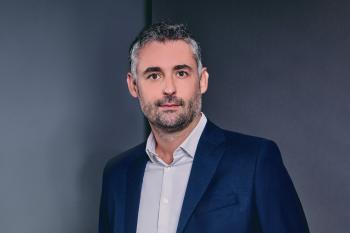
 Neville Miles, Head of Security Systems and Portfolio, Siemens Building Technologies
More and more security companies are claiming to be active in the critical infrastructure market, with one of the hottest topics being airports. GIT-SECURITY.com talked to Neville Miles, Head of Security Systems and Portfolio, Siemens Building Technologies, about this market.
How does Siemens view the attractiveness of this space?
N. Miles: Airports obviously underwent a huge security technology upgrade and retrofit over the last decade as a result of 9/11. Airports now have a multitude of systems in place that can detect lots of possible events. However, all this additional information does not mean the situation will be either avoided or responded to in the most efficient or structured way. In fact, all these systems can create more confusion than support during an incident. With this in mind, we see airports as a very attractive market because of our ability to provide a complete lifecycle solution to the customer, including systems capable of providing sensor fusion, intelligent situational awareness and decision support.
What do you see as the main threats and concerns facing airports today?
N. Miles: An airport operator's greatest fear is disruption of their services due to an event and, as a result, loss of revenue and reputation. The source of the event, whether it be a person identified in an area where they should not be, a safety event, or external events such as weather causing an airport closure, always leads to the same outcome: disruption of normal operations. In terms of specific security threats, a security breach by an individual can lead to a reset of the secure side of the airport, which is a major disruption of operations. This is more likely to occur from accidental breaches of security procedures by airport employees than from a specific targeted attack.
What are the major influences on airports going forward?
N. Miles: Airports have to ensure that they meet the regulatory and performance guidelines handed down to them by government authorities, and they have to generate revenue and thus return for their shareholders. They are primarily looking to increase revenue through new business models. If you can influence the return on investment of airports in a positive way, inside their operational parameters, you are likely to be successful.
How does Siemens address this?
N. Miles: We have many solutions to help airports improve their return on investment, including efficient and green buildings, baggage handling, transportation and parking solutions. Two solutions in particular stand out in the area of safety and security: Our command and control solutions such as Siveillance Vantage, which brings major operational efficiencies by combining all the relevant safety and security information and procedures of an airport. Secondly Siamos, a modular software solution that optimizes operational efficiencies and processes across all aspects of an airport.
Is there an innovation that stands out in the airport security market?
N. Miles: There is a lot of ongoing security innovation in this market. The most significant innovations center on more integrated and efficient airports. New scanning technologies, especially those that improve throughput while maintaining scanning accuracy, stand out. I would consider airport optimization software that enhances the overall efficiency to be the biggest innovation because it is aligned with the customers' needs and desires. This is why Siemens is focused on these areas with software platforms such as Siveillance Vantage, Siamos and Siveillance Site IQ Wide Area.
What activities is Siemens specifically working on in the area of airport security?
N. Miles: Siemens has a number of initiatives around airport security and more efficient airports in general. Siveillance Vantage is being used by the Airports of the Future initiative driven by Queensland University of Technology. This initiative is building models for all ground-based operations of an airport. Additionally, our work in open standards groups such as ONVIF to produce interoperability standards between security devices will lead to more integrated airport solutions going forward.
How do you see the onset of mobile technologies adding to the security of airports?
N. Miles: Mobile technologies will become increasingly important as a replacement for traditional radio systems. They will allow communication of important information to all safety and security personnel. Today many airport employees are using cell phones, but primarily for voice-based communication. Dealing with situations is either predominantly via radio, paper or computer, depending on whether it is a planned event, such as a plane arriving, or an emergency, such as a security violation. Moving forward, these functions will increasingly be deployed on smart devices, with detailed automatic workflows driving the actions being taken. Incidentally, all forms of communication at this point become fully synchronized. For emergency situations, we have introduced a mass notification system called Sygnal which allows communication through all available communication sources, whether they are inside the building, outside or at your side.
What about protecting the perimeter of the airport?
N. Miles: Perimeter security has become a hot topic over the last five years, with many new and innovative technologies coming to market. However, depending on the situation, the environment or the weather, different solutions provide different levels of performance. Typically, to ensure high security a combination of sensors with a physical barrier such as a fence is required. The problem then becomes that multiple systems are managing the same area. Siemens solves this by combining sensor information geospatially in combination with intelligent video, with the ability to classify objects, and surveillance video to provide a comprehensive geospatially linked perimeter solution.
Case Study: CCTV at Bodø Airport
An intelligent CCTV system with wide-area surveillance provides top security for passengers and ground staff at Bodø Airport in Norway.
The airport of Bodø, a town in the Norwegian province of Nordland, serves approximately 1.6 million passengers annually and is used by the Norwegian air force for winter training flights. Siemens Building Technologies delivered an intelligent CCTV system in order to monitor the indoor and outdoor areas of the airport, operated by Avinor AS Norway. Avinor wanted a cost-effective video solution which could effectively monitor important areas of the airport building: baggage handling, security check and the Critical parts of the Security Restricted Area (CSRA). In addition, the security of parked aircraft was to be guaranteed and the daily workflow at the airport was to be improved.
After Siemens' CCTV system had been implemented, the airport staff was given personal training to familiarize them with the functions and operational possibilities of the entire CCTV system, which made it possible to extensively optimize processes. Bodø Airport now has a CCTV system precisely adapted to its requirements: high security areas can be reliably monitored, all camera images are recorded and, in the case of an alarm, quick responses are possible. Monitoring of the outdoor areas is especially user friendly with only one TFT display. Statistical information about the waiting area in front of the security check also allows airport staff to be more precisely employed - exactly what the airport operator Avinor had envisaged.