An Integrated Approach for Train Stations
27.02.2012 - While airport safety and security are widely being discussed in the public, railway security is in most parts an insider issue. But new threats require a lot more attention, and ...
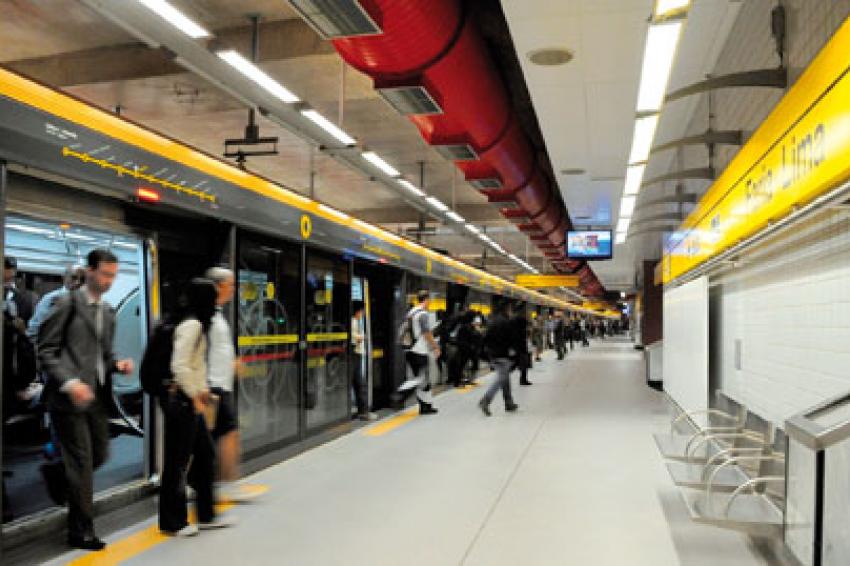
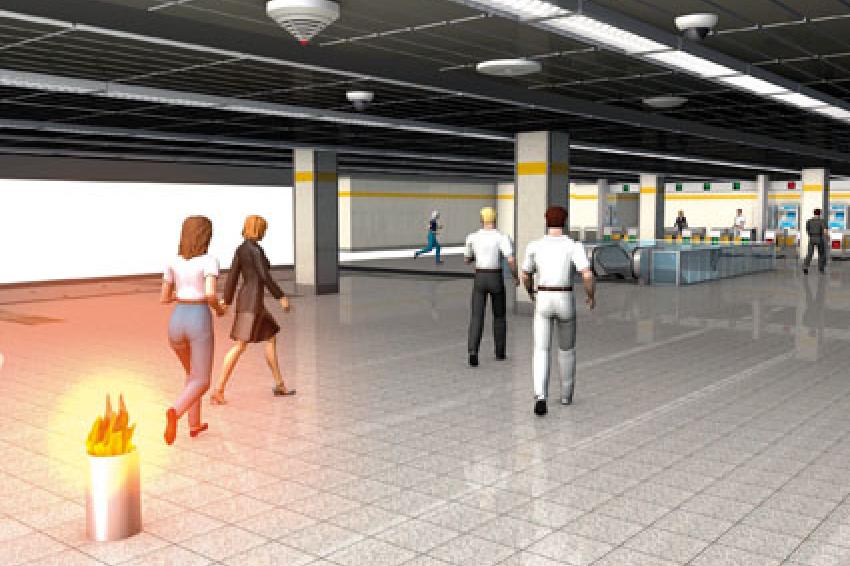
While airport safety and security are widely being discussed in the public, railway security is in most parts an insider issue. But new threats require a lot more attention, and as railway stations are changing their character with airport-like check-ins for high speed trains, extended shopping areas and integrated office buildings, security becomes ever more important. Fire alarm and evacuation systems as well as intrusion detection, access control and video surveillance must be adapted to meet new requirements, but what's more, they need to be integrated into a single security system with central operations and management.
Operators of large train stations are faced with a wide variety of safety requirements. The necessity of equipping the station concourse including all platforms as well as all other buildings with fire alarm and extinguishing systems is quite clear. However, the essential task of protecting human lives can only be effectively fulfilled by such systems if they are coupled with high-quality Public Address (PA) systems that can be used to issue easily understood instructions for evacuation in the event of an emergency. There is a considerable need to catch up here for many train stations. In addition, video cameras are needed to monitor buildings as well as extensive open spaces with limited visibility. Critical areas such as signal towers, railway monitoring centers, retail shops or equipment rooms must also be secured against unauthorized access by means of intrusion alarm systems and access control systems. More and more often, all these systems are being integrated into an intelligent building management system.
Fire Detection and Prevention
High fire loads such as cable networks, extensive technical equipment, luggage that cannot be examined, as well as the inattentiveness of passengers or staff pose a permanent danger of fire. A comprehensive fire protection concept must therefore be developed, based on the structural conditions of each train station. The relatively small underground through station Bruxelles-Central has completely different requirements in this regard than the above-ground Gare du Nord in Paris, which also has physical barriers for access to the high-speed trains.
It is never possible to completely exclude the occurrence of a fire. However, to avoid a fire or a smoldering fire turning into a disaster, early and earliest detection is of particular importance, because in its first stage of development a fire can usually be fought without major consequences and without evacuation.
Therefore, adequate coverage of all parts of buildings with fire detectors is a matter of course. However, the fire alarm system should also be capable of localizing incoming alarms - the more accurately the better. In extensive buildings like train station halls, the information that a smoldering fire has been detected somewhere is not of much use to the fire department. Modern alarm panels with intelligent bus systems therefore provide a way to uniquely identify and also localize each individual alarm. To accomplish this, optical, thermal and chemical sensors with different levels of sensitivity can be used to accommodate varying requirements of individual sections of the building. In up-market retail shops or lounges, it is even possible to use nearly invisible detectors that are completely integrated into the ceiling and fit ideally into design oriented interiors
The ever growing cabling systems in major train stations represent a specific challenge for fire fighters as well as for planners of fire detection systems. Here, the use of low smoke zero-halogen (LSZH) cables is recommended, as these are harder to ignite than standard PVC insulated cables. Also, they release much smaller amounts of toxic and corrosive gases during combustion. Finally, LSZH cables help to keep evacuation routes and attack routes for firefighters smoke free - and smoke is usually more dangerous than the fire itself.
Another critical component of the station infrastructure needs special attention, too: the data center. Not only can a fire cause tremendous physical damage here, but it has the potential to disrupt the entire operation of a train station for days, if not weeks. In order to prevent fires here, it is advisable to reduce the amount of oxygen in the data center. This will reduce the opportunity of a fire getting started, but it will not altogether eliminate the risk. Measures must therefore be taken to detect incipient fires in a very early stage. This is where aspirating smoke detectors come in, which consist of sampling pipes in the monitored area and a detector unit that can be located elsewhere. The detector generates a vacuum in the sampling pipes to ensure continuous air intake from the monitored area and will detect smoke particles therein with very high sensitivity.
There are often different areas that have very individual requirements of the fire alarm system, especially in large and expansive railway station facilities. In such applications, it is recommended to use modular and networkable systems such as the Modular Fire Panel 5000 Series from Bosch. This does not only facilitate the deployment of individually configured and scalable fire panels for different sections of the station, but also enables networking of multiple panels spread across the premises. These networked panels can then be operated and managed as a single integrated system. They also lend themselves to being part of an overall security system encompassing access control, intrusion detection, and video surveillance as well.
Evacuation
Systems for alarm signals and evacuation go hand in hand with fire protection technology and the need for integration and central operations is evident. In turn, alarming must be combined with the escape route control systems in order to guarantee safe and fast evacuation of the endangered area. Voice alarm systems play an important role in such evacuation procedures, for example to provide meaningful guidance to the flow of people to the stairways, and to instruct people to take their baggage with them in the event of a bomb alarm, but to leave everything in the event of a fire. In addition, research has shown that the response time for spoken alarm announcements is shorter, because a ringing bell is often interpreted as a false alarm or fire drill, which then slows down the evacuation process.
Hence, the Public Address system takes on one of the most important functions in train station safety in an emergency. During normal operations, it can also be used to provide clear information to passengers and visitors, such as the announcement of departures or arrivals. From a technical perspective, a PA system is one of the most critical areas because the systems have to be adjusted to the prevailing premises and acoustic conditions in each case. Here, serious planning mistakes are often made, which can easily lead to warnings not being understood or only poorly understood. Still today, one often hears scratchy train station announcements that are mostly incomprehensible when a train is arriving or departing. However, there are speaker systems like the Vari-directional Arrays from Bosch that were developed especially for environments with poor acoustics. They ensure optimum sound quality and speech intelligibility throughout the railway station.
Access Control and Intrusion Alarm Systems
The management of a large number of employees as well as staff of external companies and security areas of different sensitivity require effective and flexible access control.
It is not sufficient to simply assign different permissions to the different people. Rather today, all accesses and unsuccessful access attempts must be logged to ensure compliance with government and other regulations. This way, the operator will know at any time who entered the different rooms and/or who tried to. In order to prevent misuse of access cards, the use of biometric recognition systems is recommended.
While authorized employees usually enter security-critical areas via the designated accesses, unauthorized persons look for other possibilities. Equipment rooms, signal towers, control stations, etc. must therefore also be secured against undesired visitors by means of an intrusion alarm system. The same approach applies to the increasing number of retail shops. Many major train stations have developed into true shopping centers over the past few years. Some were even planned as such right from the start, like the new main train station in Berlin. Further, train station premises often include office buildings or hotels that also have to be secured. Modular intrusion alarm systems like the Modular Alarm Platform 5000 from Bosch facilitate a very flexible system architecture in those types of heterogeneous environments. It has remote control units and a refined system of rights in order to meet the needs of the individual areas while enabling central management at the same time.
Video Surveillance
Video surveillance of such extensive premises such as those found at large train stations is a considerable challenge to security personnel. On the one hand, an expansive outdoor area must be secured, and on the other hand there are also large built-up areas with quite different traffic patterns. In addition, the check-in procedure for many high-speed trains is almost like that of an aircraft. Passengers check their luggage in before departure and receive it when they reach their destination. In such cases, the luggage areas must also be monitored. This is not only for security, but also helps to find lost bags. Besides surveillance for larger areas, it is also often necessary to set up dedicated cameras at specific locations such as those where automatic ticket machines are installed.
Ultimately, video surveillance can also be used as verification for access control or intrusion alarms as long as the individual systems are interoperable and managed through a central integration platform.
While large inner-city train stations are very popular locations as a rule and are therefore not entirely easy to monitor, just the opposite situation is also a problem. There are many smaller train stations with less passenger traffic that are not used very frequently. Today, such train stations are mostly operated without any dedicated staff. Here, it is necessary to organize the video surveillance using regional traffic monitoring centers. Because of the greater distances, this can usually only be realized using IP-based systems, since video data can then be transmitted over an existing infrastructure.
Besides the cost-effective transmission and utilization of already existing networks, Video over IP also has other benefits: Digitization makes it possible to use low-cost video memory that can be placed anywhere in the network to keep video images for freely definable time periods. Convenient search functions then make it easy to find those pictures and video sequences.
Video image analysis has also made tremendous progress through the use of digital technology. On the one hand, modern video image analysis systems facilitate far more accurate recognition of incidents because lack of concentration and other human errors are excluded right from the start. On the other hand, it makes security personnel much more efficient because they only have to respond to alarms instead of monitoring a multitude of live video streams.
Central Management
Thousands of notifications and alarms from all security areas and technological facilities need to be managed and coordinated on a daily basis in the security monitoring center of a train station. This can only be mastered efficiently if all security systems are integrated to allow for central alarm and notification management. This is usually accomplished using a building management system such as the Building Integration System (BIS) from Bosch. Apart from managing security systems, the BIS can also be used to monitor other technical systems like conveyor systems as well as heating, ventilation and air-conditioning.
In building management, all incoming notifications from connected subsystems are summarized, visualized and processed on a standardized user interface. This is simplified through the increasing use of classic network technology such as Ethernet and IP, which represent a common and cost-efficient technical integration platform.